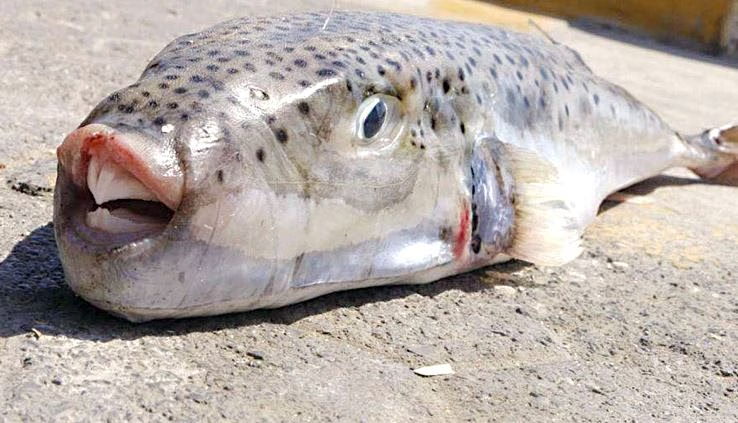
The presence of toxic pufferfish in Greek waters has alerted local fishermen and bathers who are highly concerned concerned about a possible bite by the silver-cheeked species.
Experts appear reassuring saying that the species is of concern to fishermen, while bathers should not be worried.
Nevertheless, the Greek Red Cross has issued First Aid instructions for the case a bather should be bitten by the species.
The species, which migrated to the Mediterranean from the Indo-Pacific through the Suez Canal, was first detected in Greece in 2005 off Crete and the Dodecanese islands. It has since expanded its presence throughout Greek waters.
Scientists warn that the fish contains tetrodotoxin, a highly potent neurotoxin that can cause paralysis, respiratory failure and death if consumed. Because the toxin can be present throughout the fish, experts say no part of it should be considered safe to eat.
At the same time, fishermen especially on Crete have been complaining that the puffer-fish swarm destroy the fishing nets and ask for permission to exterminate them. However, according to news website in.gr, the National Action Plan against the pufferfish remains in the drawer of the Ministry of Rural Development since 2024. It is a subsidy plan for fishermen in Crete for targeted puffer fishfishing
The invasive pufferfish has become a growing problem across the eastern Mediterranean, threatening marine ecosystems and fisheries. Its aggressive feeding behavior and powerful jaws can damage fishing nets and other equipment, adding to concerns among coastal communities. It has since expanded its presence throughout Greek waters.
Experts: “The problem concerns fishermen, not bathers”

Experts are calm about the presence of the pufferfish in the Greek waters saying the species are rarely found in shallow waters.
According to Anastasia Miliou, Director of the Marine Protection Institute “ARCHIPELAGOS”, there is misinformation about the presence of the pufferfish in Greek seas and stressed that no fish attacks a person unless its behavior has changed, citing cases where the species are fed or petted by people, leading to unwanted interactions.
Speaking to Mega TV, Miliou stressed that they have rarely encounter pufferfish in shallow waters.
“The problem is for fishermen. In a country where we do not manage fisheries, where we intensively fish for species that would eat the pufferfish and we do not have natural mechanisms anyway, the main problem has to do with fisheries and our seas. For bathers, I think it is a huge exaggeration. On 99.5% of the Greek coastline we do not have a problem”, the director explained.
She added that “there is no reason to panic about the hare heads. Last week we were talking about sharks, jellyfish and sea anemones. People have panicked without any reason. The problem exists for fisheries, for the sea and for marine life.”
The species population has not increased dramatically compared to previous years, Miliou added..
Greek Red Cross
The Hellenic Red Cross has issued first-aid guidance for injuries caused by the silver-cheeked toadfish, or pufferfish (Lagocephalus sceleratus), as sightings of the invasive species continue to increase in Greek waters.
The organization warned that while the fish’s bite is not toxic, its powerful beak-like jaws can cause serious injuries and heavy bleeding.
Anyone bitten should immediately wash the wound thoroughly with clean running water and soap, apply firm pressure with a clean cloth or gauze to stop the bleeding, and keep the injured limb elevated if the bleeding is severe, the Red Cross said.
Medical attention should always be sought, as victims may require specialized care, a tetanus shot or stitches for deep wounds. In remote areas or cases of severe bleeding, authorities advise calling emergency services at 166 or 112 and providing first aid until help arrives.

